
The War Worries - A Common Man Perspective
The Impact of War on All Aspects of Life
3/11/20264 min read
The Impact of War on All Aspects of Life
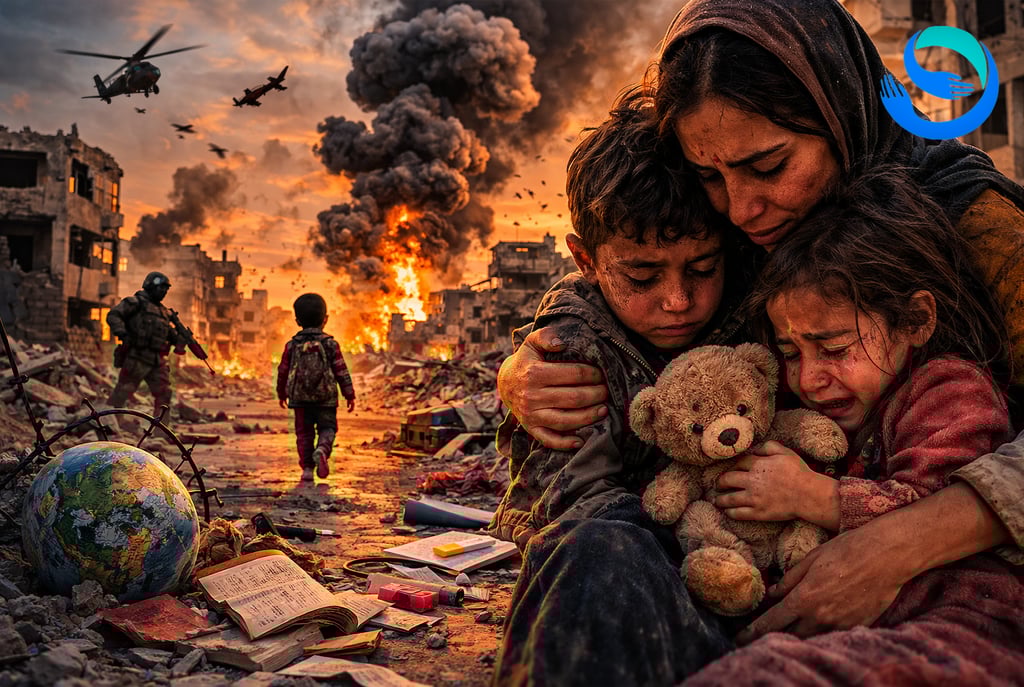
War has been a recurring element of human history, shaping nations, societies, and cultures. From ancient conflicts fought with swords to modern wars involving advanced technology, warfare has always left profound and lasting effects on every aspect of life. The consequences of war go far beyond the battlefield. It influences economies, politics, societies, mental health, education, culture, and the environment. Even after the guns fall silent, the impact of war continues to shape generations.
This article explores the far-reaching effects of war on different dimensions of human life.
1. Human Cost: Loss of Lives and Displacement
The most immediate and visible impact of war is the loss of human life. Soldiers and civilians alike suffer casualties. In modern warfare, civilians often represent a large proportion of victims due to urban battles, airstrikes, and missile attacks.
War also causes mass displacement. Millions of people are forced to flee their homes to escape violence, leading to refugee crises. Families are separated, communities are destroyed, and people are left without shelter, food, or security.
Refugees often face difficult living conditions in camps or unfamiliar countries. Their access to education, healthcare, and employment becomes uncertain, creating long-term humanitarian challenges.
2. Economic Destruction
War severely damages national and global economies. Infrastructure such as roads, bridges, factories, and power systems is often destroyed during conflict.
Key economic impacts include:
Loss of productivity due to disrupted industries
Increased government spending on military operations
Inflation and rising prices caused by supply chain disruptions
Unemployment due to destroyed businesses
Long-term debt as countries borrow money to finance war
War also disrupts global trade. When major trade routes or production centers are affected, the ripple effects can influence markets worldwide, causing shortages and rising costs.
3. Political and Geopolitical Consequences
Wars reshape political landscapes. Governments may collapse, borders may change, and new alliances may emerge.
Conflict often leads to:
Political instability
Military coups or revolutions
Changes in leadership
New international alliances or rivalries
Sometimes wars result in the creation of new nations, while in other cases they strengthen authoritarian control as governments impose strict measures in the name of national security.
International organizations and diplomatic efforts usually step in after conflicts to stabilize regions, but rebuilding political trust can take decades.
4. Social Disruption
War deeply affects the social fabric of societies. Communities that once lived together peacefully may become divided due to ethnic, religious, or political tensions.
Families lose members, children grow up without parents, and social support systems weaken.
Common social consequences include:
Increased poverty
Breakdown of communities
Rise in crime rates
Social mistrust and polarization
Women and children are often among the most vulnerable during wartime. They may face violence, exploitation, or forced labor in unstable environments.
5. Psychological and Mental Health Effects
The psychological scars of war can last far longer than the conflict itself. Soldiers returning from battle often experience trauma, while civilians exposed to violence suffer similar mental health challenges.
Common psychological impacts include:
Post-Traumatic Stress Disorder (PTSD)
Anxiety and depression
Sleep disorders
Emotional trauma in children
Children growing up in war zones may develop fear, aggression, or difficulty forming relationships. Entire generations can carry emotional wounds that affect social stability and development.
6. Impact on Education
Education systems are often severely disrupted during wars. Schools may be destroyed or converted into military facilities. Teachers and students may be displaced, injured, or forced to abandon their studies.
The consequences include:
Interrupted education for millions of children
Increased child labor
Lower literacy rates
Loss of skilled future workforce
When education is disrupted for long periods, the long-term development of a country can suffer significantly.
7. Cultural and Heritage Loss
War can destroy cultural heritage and historical landmarks that represent the identity of a nation. Museums, libraries, religious sites, and ancient monuments are often damaged or looted during conflicts.
The destruction of cultural heritage erases parts of human history and identity. In some cases, cultural sites are deliberately targeted to weaken the morale and unity of communities.
The loss of art, literature, and architecture is not only a national tragedy but also a global cultural loss.
8. Environmental Damage
Modern warfare has severe environmental consequences. Bombings, chemical weapons, and destruction of industrial facilities can contaminate land, water, and air.
Environmental impacts include:
Soil and water pollution
Destruction of forests and wildlife habitats
Oil spills and industrial contamination
Long-term radiation or chemical hazards
These environmental effects can persist for decades, affecting agriculture, biodiversity, and human health.
9. Technological and Scientific Changes
Interestingly, war has historically accelerated technological development. Many innovations that later benefited civilian life were initially developed during wartime.
Examples include advancements in:
Medical technology
Communication systems
Aviation and space technologies
Computing and cybersecurity
However, these advancements often come at a high human cost, raising ethical questions about the relationship between innovation and conflict.
10. Long-Term Reconstruction and Recovery
After a war ends, rebuilding a nation is a long and complex process. Governments must restore infrastructure, rebuild institutions, and heal social divisions.
Post-war recovery often requires:
International aid and financial support
Reconstruction of housing and public services
Economic reforms
Peacebuilding and reconciliation efforts
Even with strong recovery programs, it may take decades for a country to fully recover from the devastation of war.
Conclusion
War affects far more than armies and battlefields. It touches every aspect of human life—from economic stability and political systems to social harmony, mental health, education, culture, and the environment.
The consequences of war extend across generations, shaping the future of nations and the lives of millions of people. While conflicts may sometimes appear inevitable in global politics, the long-term damage they cause reminds humanity of the importance of diplomacy, cooperation, and peaceful resolution of disputes.
Connect
Reach out anytime, we love hearing from you.
Call
ncsreedhar@whatzonn.com
+91-9949022585
© 2025. All rights reserved.
Related Key Words
#whatzonn #WhatZonn #SocialMediaTips #DigitalMarketing #SEO #OnlineSuccess #ContentCreation #VideoMarketing #SocialMediaGrowth #BrandAwareness #MarketingStrategy #EngagementBoost #ViralVideo #AudienceReach #ContentStrategy #SocialMediaExperts #EntrepreneurTips #BoostYourBrand #OnlinePresence